Seiichi Hayashi is a titan of the Japanese avant-garde, a multidisciplinary artist whose career has spanned animation, experimental manga, and iconic commercial illustration. Born in 1945, he emerged as a central figure in the 1960s and 70s counterculture, bridging the gap between traditional Japanese aesthetics and the modern “Nouvelle Vague” (New Wave) of visual storytelling.


Hayashi’s “lovely illustration style” is often described as a hauntingly beautiful fusion of the old and the new. It is characterized by:
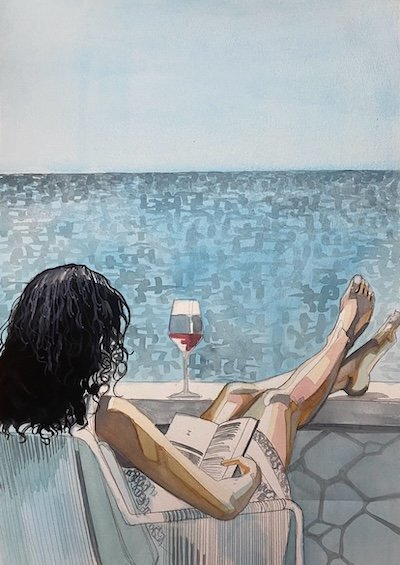
- Modern Nihonga: He draws heavily from Nihonga (traditional Japanese painting) and Ukiyo-e (woodblock prints), particularly the bijinga tradition—portraits of “beautiful women” with willowy figures and expressive, graceful poses.
- Minimalist Emotion: His characters are frequently depicted with sparse lines, sometimes lacking mouths or possessing simplified, emotive eyes. This stylistic choice focuses the viewer’s attention on the character’s interior mood and the surrounding atmosphere.
- A Pop-Art Edge: Despite his traditional roots, Hayashi’s work is deeply influenced by Western pop culture, French New Wave cinema, and psychedelic art. This results in a unique “Enka Gekiga” style—a visual form of the “Japanese blues” that feels both nostalgic and experimental.
Seiichi Hayashi’s impact lies in his ability to make the avant-garde accessible and the commercial artistic. He taught a generation of artists that manga could be poetic and elliptical, and that a candy wrapper could be as carefully crafted as a gallery painting. His work remains a “condensed visual poetry” that continues to inspire illustrators and graphic novelists worldwide.